 Updated. If you open multiple bank accounts in order to take advantage of higher interest rates or sign-up bonuses, you may be concerned about any potential consequences from all that activity. In my experience, there are two main factors to be aware of when you open a bank account:
Banks pulling your ChexSystems report. ChexSystems is a consumer information database used by an estimated 80-90% of all banks to help determine the risk of opening new accounts. Think of it as the bank’s version of a credit bureau. If a person commits check fraud or leaves their account with a negative balance, it will be listed here. In addition, the simple act of opening or closing a bank account may be recorded in their database.
One thing that may raise a red flag is opening up several bank accounts in a very short period of time. This is because of the connection of multiple bank accounts to a form of fraud called ‘check kiting‘. Kiting usually involves sending several checks between different banks to create an temporary surplus of money from the bank’s funds availability policies, and then cashing that out before all the checks fully clear. In the end, one of the banks is left holding the bag.
But for the most part, as long as you haven’t left any accounts in bad standing you shouldn’t run into any problems with opening up new bank accounts. I’ve opened up accounts at over 30 different banks over the last several years, sometimes two or three in one week, and have never been rejected by any of them. However, having a negative ChexSystems record can leave you blacklisted from all the major banks (even if you make $100k a year). Information generally stays on your ChexSystems report for five (5) years.
As with credit reports, you can get a free copy of your ChexSystems report once every 12 months.
Banks pulling your credit report. Yes, it is legal for banks to pull your credit report. According to the consumer help site HelpWithMyBank.gov, per the Fair Credit Reporting Act, a bank can obtain a consumer report for any legitimate business need, including the following:
- credit transactions
- review or collection of an account
- opening a deposit or savings account
- underwriting of insurance
There are a couple reasons they do so. First, this is another way for them to identify you and measure the risk of giving you a new account. Second, they may use this information to market other financial products like credit cards or home equity loans to you.
I’ve talked about the difference between hard and soft credit pulls. Usually, bank will just perform a soft credit check, which doesn’t affect your credit score. (All those “pre-approved” credit card applications in the mail are from soft credit checks.) However, some banks also perform hard credit checks, which do hurt your credit score slightly. Some banks do offer a line of credit in lieu of overdraft protection, but in general there doesn’t appear to be a rhyme or reason as to which ones do hard pull and which ones don’t. I personally suspect that it may just be unintentional and they don’t know the difference. (More importantly, most people don’t know the difference so they don’t really get any pushback.)
You can get a free copy of each of your credit reports (which lists all your hard pulls and which financial instituation did the pull) once every 12 months at AnnualCreditReport.com.
To summarize, I usually try to find out first if the bank will perform a hard credit check based on the reported experiences of other consumers online. This isn’t an exact science, as the banks can often change their practices. If it is likely they will, then I want to make sure that I am getting enough value from the new account because I know I can already trade a hard pull for $200-$500 of value from a credit card application. Otherwise, I don’t really worry about the number of bank accounts I have, although I do close them as soon as I don’t foresee any future benefit.
 Our family keeps a full year of expenses put aside in cash reserves; it provides us with financial stability with the additional side benefits of lower stress and less concern about stock market gyrations. Emergency funds can actually have a


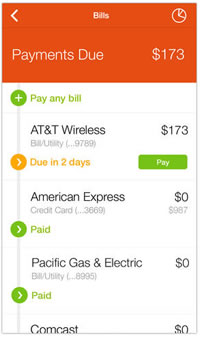 A few readers e-mailed me to let me know that bill management website Manilla.com announced that they will be shutting down. Surprising, as they were just mentioned in Money magazine last month!
 Ally Bank

 Update: Citibank has a
  Capital One Consumer Bank has their annual Financial Independence Day promotion which boosts the usual bonus for their Consumer Bank Savings and 360 Checking accounts. (Artist formerly known as ING Direct.) Offers good until Wednesday, July 3rd 11:59PM ET.
 New inflation numbers for March 2013 were just announced, so it’s time for the usual semi-annual update and rate predictions.
  The Best Credit Card Bonus Offers – 2026
 Big List of Free Stocks from Brokerage Apps
 Best Interest Rates on Cash - 2026
 Free Credit Scores x 3 + Free Credit Monitoring
 Best No Fee 0% APR Balance Transfer Offers
 Little-Known Cellular Data Plans That Can Save Big Money
 How To Haggle Your Cable or Direct TV Bill
 Big List of Free Consumer Data Reports (Credit, Rent, Work)