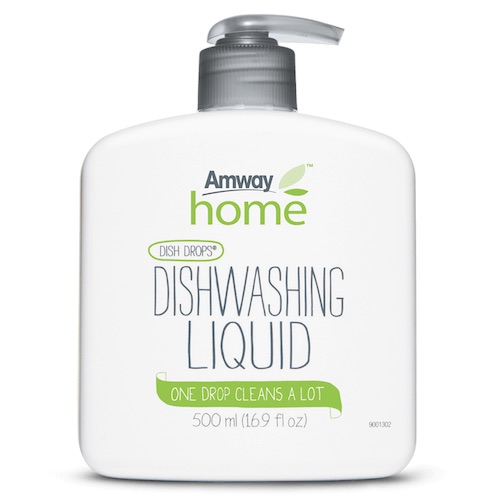
In this current low-regulatory environment, I was surprised to see that the Federal Trade Commission (FTC), the State of Washington, and Amway just announced a $225 million settlement over “Unfair and Deceptive Business Practices”.
Multilevel Marketing (MLM) firms, sometimes called “pyramid schemes”, have a common set of criticisms and the settlement details offered some detailed examples of those criticisms. If you have thought about joining an MLM, you should definitely read the entire thing.
Most Amway “Independent Business Owners” (IBOs) lost money. Amway promises you an easy, ready-to-go business opportunity. $40,000+ a year on the side sounds great, right? In fact, the majority of IBOs spent more money purchasing Amway products and paid training materials than they ever made back from Amway. Not really a great side hustle when most people joining ended up losing more money than if they did nothing at all. At least if you deliver for DoorDash, you’ll get paid for your time.
The primary goal is to recruit more IBOs (build the pyramid). You end up getting the most commission when you recruit another person as an Amway IBO (who then buys the products), not actually selling products to customers. The products are nothing special. The “business owners” themselves are the source of profit.
Amway pressured IBOs to buy product themselves and then pretend those were real sales. The settlement states Amway and its affiliates deceptively instructed IBOs to falsely report product sales that never happened. This was designed to create the illusion that Amway’s revenue came from legitimate retail sales rather than internal recruitment purchases. This in turn makes the next recruit think it’s a great business.
Expensive paid training materials and seminars. Another significant source of revenue for people who actually made money at Amway was by selling proprietary training materials and seminars to new IBOs. Many are pitched as “required” for success.
Beyond the $225 million judgement amount, which mostly goes to past Amway IBOs, the settlement will enforce the following new rules to try and counter the above dangers for future Amway IBOs:
- Actually sell 70% of your product: IBOs will be required to sell to others at least 70% of the products they purchase from Amway each month.
- Reduced Recruitment Compensation: Recruiters will receive substantially reduced compensation if the IBOs they recruit buy products but do not resell them.
- Sales Tracking & Receipts: IBOs will need to report all of their customer sales promptly, including the actual sales price, and Amway will send receipts to all of an IBO’s customers.
- No paid training during first year. Amway can’t charge new IBOs for any training or “mentorship” during their first year.
I hope that news of this settlement travels so that people can be informed of the potential dangers of most MLM programs. I’m sure some members make a little bit of side income selling the turnkey MLM product, but the facts are the most just get eaten up in the machine and end up with a bunch of unsold product in their garage.
MLMs are definitely on my “Simply Avoid” list. Beyond having to bother my friends and family, most MLMs don’t have much upside potential because the product is a commodity. I would tell my kids that even the more successful Amway folks would have been better off creating their own business based on their own set of unique products, knowledge, and/or skills. It’s very cheap to start a business now – keep your downside low, and your upside high.
Image source: Amway
 My family enjoys watching
  As a follow-up to my initial post on the
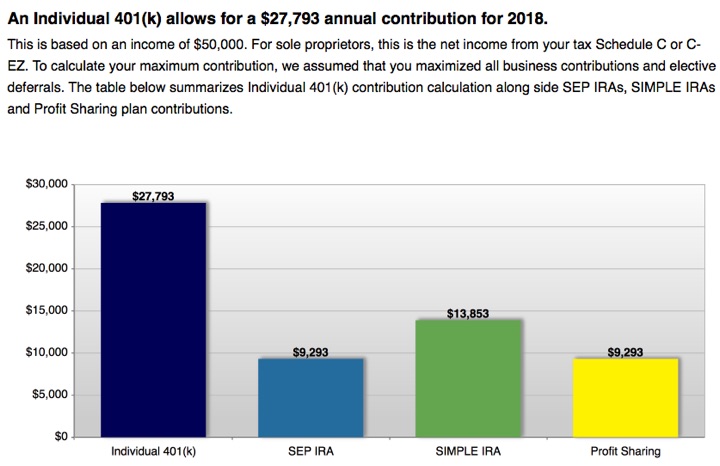
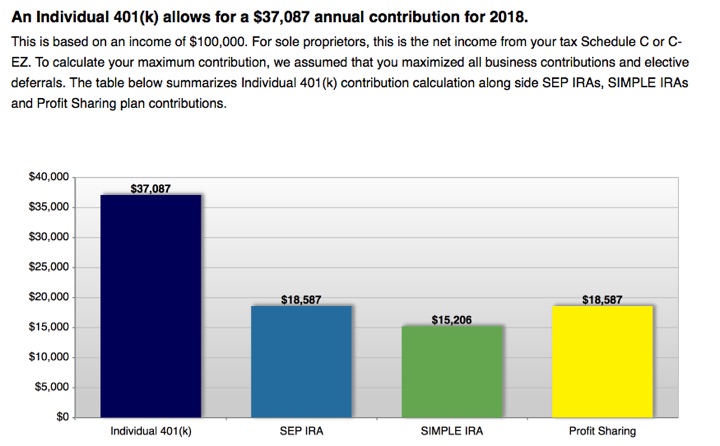
  I use a Solo 401k plan because it lets you contribute the most tax-deferred money for a modest amount of self-employed income. At the end of each year, I can more clearly estimate my total income for 2019 and thus my maximum contribution limits. There are several online calculators out there (try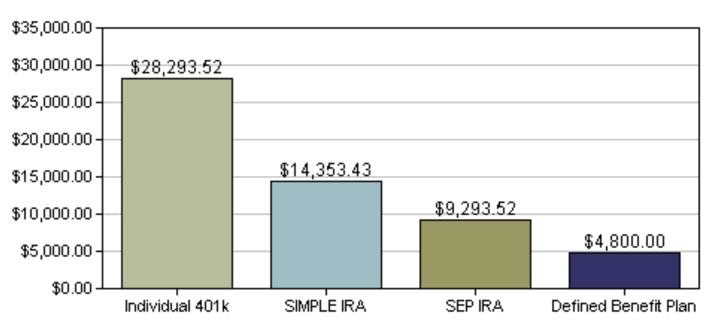

 Charles Munger is probably best known as the Vice Chairman of Berkshire Hathaway and partner of Warren Buffett. The University of Michigan Ross School of Business recently shared a
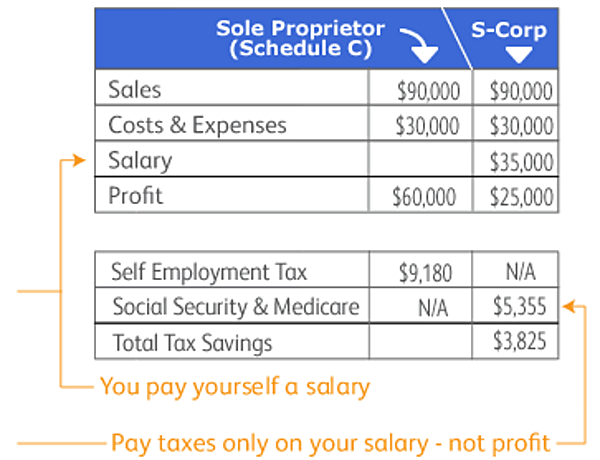
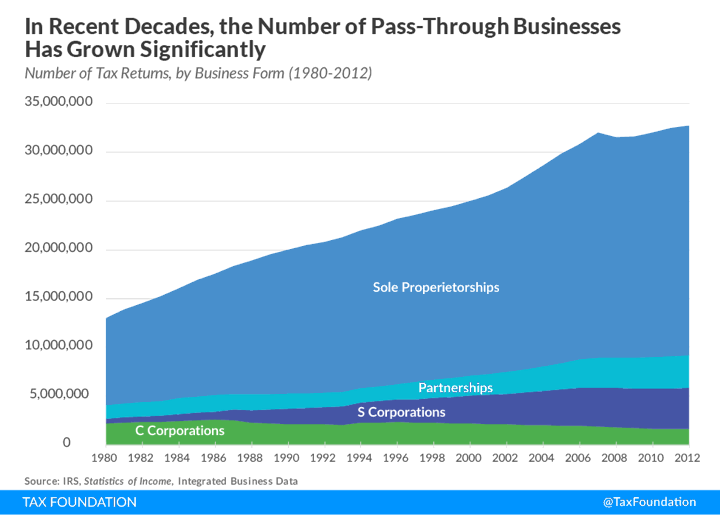
 If you have significant self-employment or other income outside of your W-2 paycheck that is not subject to witholding (interest, rents, dividends, alimony), you may need to send the IRS some money before the usual tax-filing time. This is my annual reminder to either slide in a last-minute payment for 2016 if needed, or plan ahead for four equal installments in 2017.
 Many of the podcasts I listen to aren’t financially-related, but I’ve recently been catching up
  The Best Credit Card Bonus Offers – 2026
 Big List of Free Stocks from Brokerage Apps
 Best Interest Rates on Cash - 2026
 Free Credit Scores x 3 + Free Credit Monitoring
 Best No Fee 0% APR Balance Transfer Offers
 Little-Known Cellular Data Plans That Can Save Big Money
 How To Haggle Your Cable or Direct TV Bill
 Big List of Free Consumer Data Reports (Credit, Rent, Work)