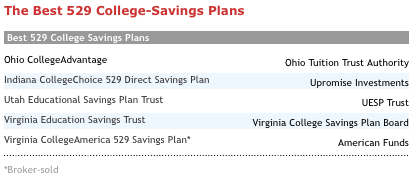
 Morningstar recently released its annual 529 College Savings Plan study [pdf] for 2010. You can read about the final product Top 5 plans here (using some subjective judging components), but the paper also had some stats that I felt were note-worthy for those not wanting to read all 48 pages of it.
Broker-sold plans make up 52% of all 529 plan assets, direct-sold make up the other 48%. I guess I shouldn’t be, but I was surprised that only half of assets are by parents not going through a broker or financial advisor.
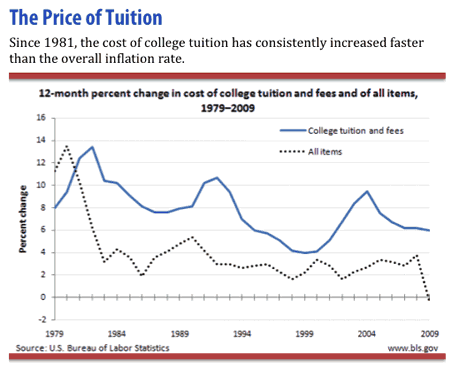
The average 529 balance was $9,700, which is a bit more than one year of tuition at a in-state public university (average $7,020) and much less than half a year of tuition of an out-of-state public school ($18,548) or a private college or university ($26,273). I wonder what the median is, to negate the effect of the tiny accounts.
Parents typically open accounts for their children when they are between the ages of 7 and 10, giving most families about a decade to save before their first tuition bill comes due. With only a decade, I would be wary of putting a big chunk in stocks. Many providers have already changed their “age-based” portfolios to hold less stocks. Only after the market drop, of course…
Here is a chart showing the industry average “glide path” for age-based investment options:
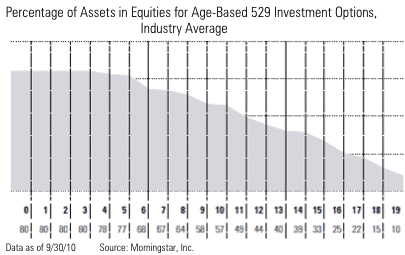
Roughly estimating, I see about 60% stocks for an 8-year old with a decade left before college. Before choosing such an option in your own 529, it’s important to see what your specific age-based glide path is. Many now have multiple options for conservative, moderate, and aggressive.
The asset-weighted total average expense ratio for direct-sold plans is between 0.49-0.64% annually, depending one if the plan allows investment options outside the program manager’s. The asset-weighted total average expense ratio for advisor-sold plans is between 1.16%-1.52%.
The five cheapest direct-sold 529 plans, ranked by asset-weighted total expense ratios, are:
- New York’s Direct 529 Program (0.25%)
- Utah Education Savings Plan (0.28%)
- The Vanguard 529 College Savings Plan, Nevada (0.28%)
- CollegeAdvantage 529 Savings Plan, Ohio (0.29%)
- College Savings Iowa 529 Plan (0.34%)
Keep in mind that this is based on actual assets held by savers, not just based on the cheapest option available in a plan. Many of these plans offer some actively-managed options for those that wish to partake.
 Even though the


 This is a reminder that the
  The Best Credit Card Bonus Offers – 2026
 Big List of Free Stocks from Brokerage Apps
 Best Interest Rates on Cash - 2026
 Free Credit Scores x 3 + Free Credit Monitoring
 Best No Fee 0% APR Balance Transfer Offers
 Little-Known Cellular Data Plans That Can Save Big Money
 How To Haggle Your Cable or Direct TV Bill
 Big List of Free Consumer Data Reports (Credit, Rent, Work)