The Calculated Risk blog has shared an updated graph of inflation-adjusted housing prices through 2011, based on Prof. Shiller’s data.

Mr. McBride also digs a little deeper and argues that because Shiller changed up the data series he was using in 1987, the true slope of the line should be a little more slightly positive. Using the original data series would result in an overall slope of housing prices increase slightly faster than inflation (1.5% per year) vs. the Shiller line (0.5% per year). His conclusion:
In many areas – if the population is increasing – house prices increase slightly faster than inflation over time, so there is an upward slope for real prices.
This reminded me of this chart via Sober Look that compared the US age distribution in 2000 and 2010 (US Census). The Boomers are getting old, and there is a little gap before the Echo Boomers come in. How will this affect housing prices in the future?

To me, the main takeaway is still that housing prices over the long run don’t rise much faster than inflation. This is not unexpected, as the cost of housing is by definition a big component of inflation. Of course, housing also provides dividends in the form of rent. So if you actually owned a house instead of most people “owning” a house with a big fat mortgage, your overall return on investment would be much better. I can’t wait to really own my house so I can earn that imaginary (imputed) rent.
In reality, what many people seem to do nowadays is hold on and rent out their properties for less than their mortgage payment and hope for price appreciation. This might work I suppose, and one could argue from the graph that prices overall are now close to historical averages. There are now some places where you can buy a house that rents for more than the mortgage payment, but unfortunately not anywhere near me (unless we’re talking huge down payment). As for me, I suppose I’ll just stick with owning low-maintenance REITs and getting my “rental income” that way.
 Our goal is to always have a full year of expenses in cash equivalents as our “emergency fund”. (This is not the same as a year of income. Our expenses are much lower than our income.) This is a cushion for a variety of potential events including job loss, health concerns, or other unplanned costs. It also allows us to take a more long-term view with our investment portfolio since we know we won’t have to touch it.
 I don’t think everyone should buy a house (or more accurately, take out a huge loan on a house), as it historically doesn’t necessarily work out to be a very good investment over short or even long periods. However, if you are geographically stable, I do think buying and eventually owning a house free and clear can be a solid component of an early retirement plan. My current forecast is to have our house paid off in
  The goal of my investment portfolio is allow withdrawals to support our needed expenses in “retirement”. Again, income and expenses are not the same thing. After mortgage payoff, I expect our required expenses to be less than 25% of our current income. I like to assume a simple 3% safe withdrawal rate, which means for every $100,000 saved, I can generate $3,000 a year of inflation-adjusted income for the rest of our lives. I used to assume 4%, but since our target “retirement” age is in our 40s and not 60s, I feel that 3% is better. Even 3% is not guaranteed, but again it does provide a quick estimate of progress. Here are recent portfolio updates:
 During the housing boom, nobody worried about appraisals. If you put in a bid to purchase a house for $300,000, the appraisal was basically guaranteed to come out at $300,000 or above. Appraisers are hired by lenders, and back then lenders wanted to make the loan happened no matter what. Therefore, if you were an appraiser and you didn’t reliably provide the number that the lender wanted, then your phone might stop ringing. I was told directly that the intended purchase price itself was a “strong indicator of value”. Rather self-fulfilling, no?
 I’ve been thinking more about whether I should commit some additional funds to pay down the principal on my mortgage and reduce my interest paid.

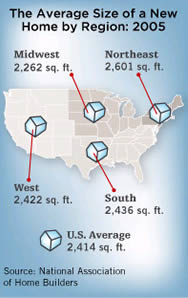
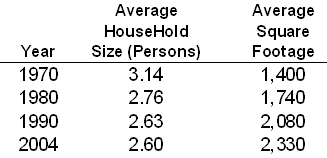

 One of my overall goals for 2012 is to make this site more of a permanent resource for information. As part of this, I want to create an “Expense Reduction Guide” that will provide an organized way to find ways to maximize personal value and make your spending efficient.


 The Best Credit Card Bonus Offers – 2026
 Big List of Free Stocks from Brokerage Apps
 Best Interest Rates on Cash - 2026
 Free Credit Scores x 3 + Free Credit Monitoring
 Best No Fee 0% APR Balance Transfer Offers
 Little-Known Cellular Data Plans That Can Save Big Money
 How To Haggle Your Cable or Direct TV Bill
 Big List of Free Consumer Data Reports (Credit, Rent, Work)