 Well, the big boys are getting their rescue/bailout plan, but I guess ours got lost in the mail… So what should we do? I think that everyone should take a second look at their cash reserves. Do you have enough?
What Job Security?
These days, I don’t see any job as safe. My company went from interviewing people to hiring… nobody. Even local and state governments are facing major budget deficits. At a minimum, I would want a few months of living expenses to tide me over until I find another job. I still remember the dot-com bust days when former tech workers ended up living in their cars.
A Reason Not To Invest In Stocks
Hey, if you’re looking for an excuse not to buy any more stocks for a while, beefing up your emergency fund is not a bad one. Any money you may need within 5 years should be in cash or short-term investments anyway.
A Reason *To* Invest In Stocks
Ironically, after you build up a nice cushion, it may actually make you feel better about investing in the stock market. I definitely helps me to keep short-term money separate from long-term money. As such, I’m still applying my upcoming income towards maxing out my 401(k) for 2008. But after that, I will probably start to save another three months of living expenses, for a total of 9 months in cash.
Less Credit Available
A lot of people used to simply assume that their home equity line of credit (HELoC) could serve as their emergency fund. But these days, it just takes one letter in the mail that says your HELOC is frozen or greatly reduced. You don’t want to be forced into taking an early withdrawal from your 401(k) or IRA, or paying exorbitant credit card interest.
If anything, apply for a credit card with a low fixed interest rate now while it is still offered. Here is a list of no fee 0% APR balance transfer credit cards. Just buy goods as you regularly would, and pay the minimum while saving the difference in an interest-bearing account. (Don’t go buying more stuff, obviously!)
Looking Ahead
For me, an alternative reason for increasing my cash reserves is that I can also use it later for investing in real estate. I still don’t see many opportunities with good cashflow right now, and may not see them for another couple of years. But I want to be ready, as the no-money-down days may never come back.
Where do you keep it?
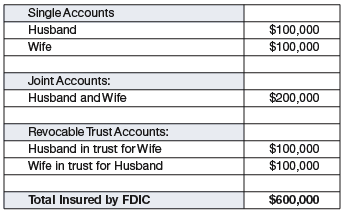
As long as it is safe and liquid, I just go by rate. Use the new FDIC insurance estimator if you have lots of money. Both Vanguard and Fidelity are participating the money market fund insurance program, so they are super-duper safe now. . Well, your old money is safe. Still, I consider money market funds with Fidelity and Vanguard as safe as FDIC-insured, although this is only my opinion. However, my cash is currently split between:
- Series I US Savings Bonds – Bought in April with 1.2% fixed rate, now only 0% fixed rate available. Note that they are illiquid for the first 12 months. Rates adjust semi-annually. I earn 4.38% for 1st six months, 6.06% for 2nd six months. With recent inflation, my 3rd six months should also be pretty good. Exempt from state income tax as well.
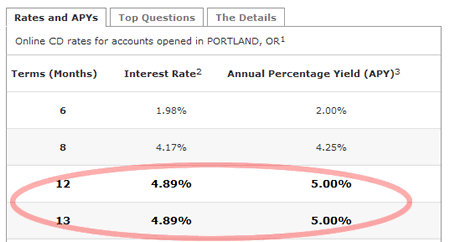
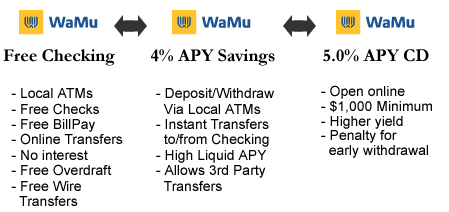
- 12-Month 5% APY CD at WaMu/Chase – Sadly, no longer available.
- Low or no-minimum banks with high liquidity – A big chunk currently in transit to Everbank at 1.10% for first 6 months.

 I wouldn’t say my wife and I are well-traveled, but we do try and experience other cultures whenever we can. Given work constraints and Corporate America’s hatred of vacations (2 weeks a year??), we are lucky if we can manage one trip per year. However, I think we’ve worked out a pretty good system of managing money needs while abroad.
 WaMu has rolled out a new 5% APY 12-month CD, which is a very high yield for that term length. Yes, WaMu has had some issues like other banks, but I’ve already explained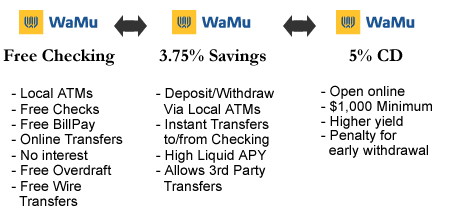
 The Best Credit Card Bonus Offers – 2026
 Big List of Free Stocks from Brokerage Apps
 Best Interest Rates on Cash - 2026
 Free Credit Scores x 3 + Free Credit Monitoring
 Best No Fee 0% APR Balance Transfer Offers
 Little-Known Cellular Data Plans That Can Save Big Money
 How To Haggle Your Cable or Direct TV Bill
 Big List of Free Consumer Data Reports (Credit, Rent, Work)