Vanguard has a blog post about their Target Retirement 20XX funds (TDFs) with a few interesting stats (via Abnormal Returns):
- 97% of all Vanguard retirement plan participants had a target-date fund as an available investment option.
- 77% of all Vanguard retirement plan participants owned a target-date fund.
- 52% of all Vanguard retirement plan participants owned a target-date fund as their sole investment.
These all-in-one funds are getting more and more popular. So what is the effect of owning these TDFs as compared to the old method where you had to do your own mixing and matching of various funds? In general, the effect was to nudge younger investors to own more stocks. Here’s their chart comparing asset allocation holdings by age in 2004 and 2018. (The earliest TDFs were born in 2003 and still had a small percentage of assets in 2004.)

I find the 2004 “hump” curve to be interesting. The average young investor in 2014 was risk-averse and increased their stock holding up until the peak at about age 40, gradually going back to owning more bonds after that. The youngest investors (under 25) used to only hold 55% stocks on average, as opposed to 88% stocks today (90% stocks is the what the current Vanguard target-date funds own at that age). On an individual level, did most of them hold a 50/50 split or were half of them 100% stocks and the other half 100% cash?
I have recommended the Vanguard Target Retirement Funds to my own family members for its low costs and broad diversification. Vanguard obviously thinks this modern glide path is an improvement, but I hope that young people will keep holding onto the fund during the next bear market. That’s the true test of whether this new system is better.


 After my post on


 Despite the fresh packaging, we should remember that the “FIRE” concept (Financially Independent, Retire Early) is anything but a new concept. Even I can’t help being a little intrigued by the clickbait title “This Secret Trick Let This Couple Retire at 38”. Such an article could have been written about the
  Annuities have a rather mixed reputation, which I think is mostly deserved. Some are amazingly complex and expensive (the word “Indexed” can be bad in this world). Then there are simple, straightforward ones that are worth consideration, including single premium immediate annuities (SPIA). The most basic version lets you convert a lump-sum payment into a regular stream of income payments that is guaranteed and doesn’t ever vary, period.








 T. Rowe Price has an article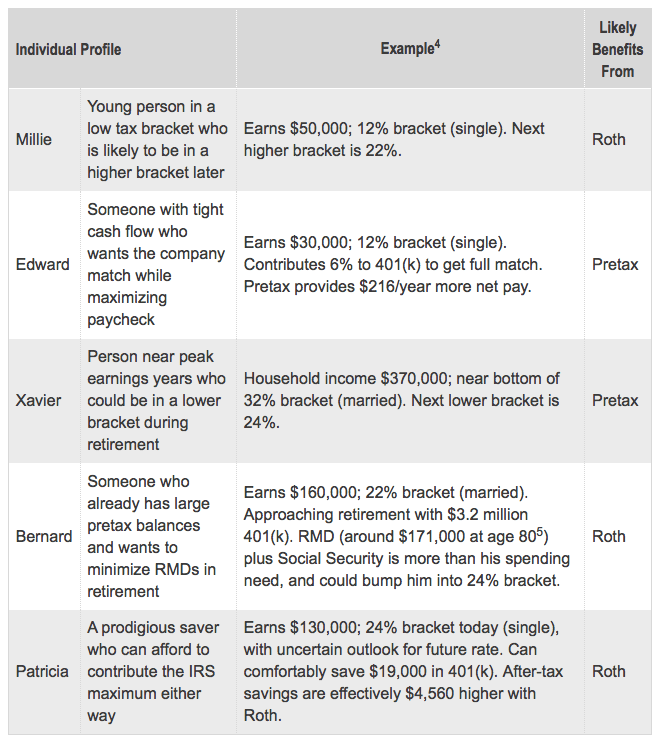
 The Best Credit Card Bonus Offers – 2026
 Big List of Free Stocks from Brokerage Apps
 Best Interest Rates on Cash - 2026
 Free Credit Scores x 3 + Free Credit Monitoring
 Best No Fee 0% APR Balance Transfer Offers
 Little-Known Cellular Data Plans That Can Save Big Money
 How To Haggle Your Cable or Direct TV Bill
 Big List of Free Consumer Data Reports (Credit, Rent, Work)