
Instead of just looking at one year of returns, here’s an annual exercise that helps you look at the bigger picture. You may know the 10-year historical return of the S&P 500, but most of us didn’t just invest a big lump sum of money in 2007, and most of us don’t just invest in the S&P 500.
Investment benchmark. There are many possible choices for an investment benchmark, but I chose the Vanguard Target Retirement 2045 Fund. This all-in-one fund is low-cost, highly-diversified, and available in many employer retirement plans as well open to anyone with an IRA. In the early accumulation phase, this fund is 90% stocks (both domestic and international) and 10% bonds (investment-grade domestic and international). I think it’s a solid default choice where you could easily do worse over the long run.
Investment amount. For the last decade, the maximum allowable contribution to a Traditional or Roth IRA has been roughly $5,000 per person. (It was $4k in 2007, but has been $5k or higher since.) That means a couple could put away at least $10,000 a year in tax-advantaged accounts. If you have a household income of $67,000, then $10,000 is right at the 15% savings rate mark.
A decade of real-world savings. To create a simple-yet-realistic scenario, what would have happened if you put $10,000 a year into the Vanguard Target Retirement 2045 Fund, every year, for the past 10 years. You’d have put in $100,000 over time, but in more manageable increments. With the handy tools at Morningstar and a quick Google spreadsheet, we get this:

In this case, I would say that ending up with a gain of over $50,000 for every $10k annual investment is nothing to sneeze at. If you put in $20k every year, your gains would have been over $100,000. Some of that money was invested right before the crash in 2008, and some has only been in the market for a few years. Not every year will have turned out to be a great year to invest, but taking it all together provides a more calm, balanced picture.



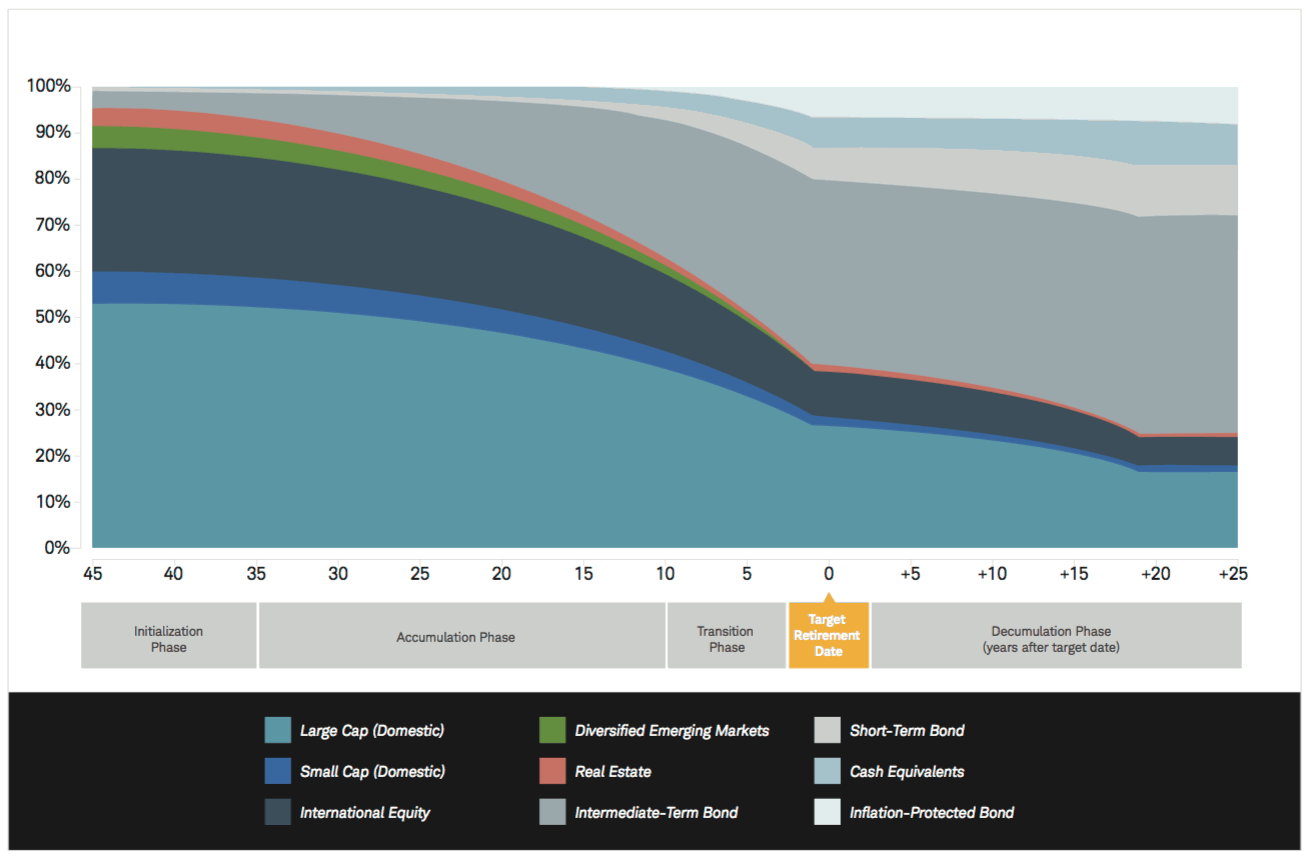
 There is a lot of focus on how to accumulate a big nest egg, but possibly even more complicated is how to spend it down. Vanguard Research has released a new whitepaper called




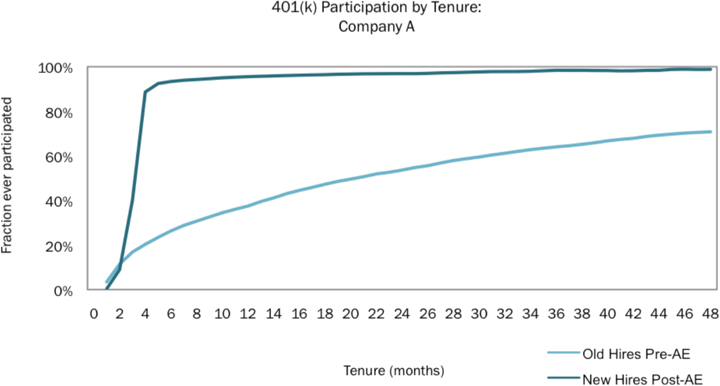
 We’ve all heard that you should keep an emergency fund in case of unexpected expenses or unemployment. But what if you don’t have the cash? Personal finance author Jonathan Clements presents a mathematical argument for using your 401(k) as an emergency fund in his recent article
  I like the idea of living off dividend and interest income. Who doesn’t? The problem is that you can’t just buy stocks with the absolute highest dividend yields and junk bonds with the highest interest rates without giving up something in return. There are many bad investments lurking out there for desperate retirees looking only at income. My goal is to generate portfolio income that will keep up with inflation.
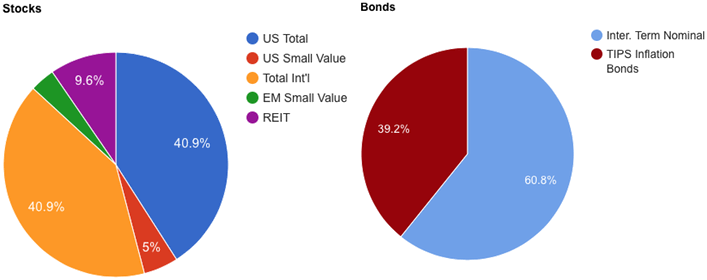
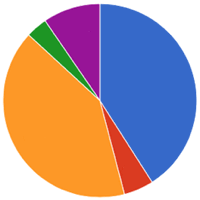 Here is a roughly mid-year 2016 update on my investment portfolio holdings. This includes tax-deferred accounts like 401ks, IRAs, and taxable brokerage holdings, but excludes things like our primary home and cash reserves (emergency fund). The purpose of this portfolio is to create enough income to cover household expenses.


 The Best Credit Card Bonus Offers – 2026
 Big List of Free Stocks from Brokerage Apps
 Best Interest Rates on Cash - 2026
 Free Credit Scores x 3 + Free Credit Monitoring
 Best No Fee 0% APR Balance Transfer Offers
 Little-Known Cellular Data Plans That Can Save Big Money
 How To Haggle Your Cable or Direct TV Bill
 Big List of Free Consumer Data Reports (Credit, Rent, Work)